
7 4: Master Budgets Business LibreTexts

Shehadeh assumes that the cost of direct labor will be funded in the quarter incurred. The direct labor budget estimates the time and cost of labor required to produce the number of units in the production budget. The sales budget is the first component of the master budget and shows the expected sales revenue and units sold. To project the variable expenses, use the variable expense per unit or the variable expense as a percentage of sales. For example, if the commission rate is 5% of sales, and the sales budget shows $100,000 of sales, then the commission expense is $5,000.
Direct Materials Purchases Budget
The main master budget components are the operating budget and the financial budget. The selling and administrative expense budget may be further subdivided into budgets for individual departments, such as the accounting, engineering, facilities, and marketing departments. In more complex organizations, the starting point might involve scenario planning and multiple demand forecasts. This approach considers various market conditions, enabling firms to prepare alternate budget scenarios.
Sales Budget and Forecasting
Although many organizations may have variable and fixed costs in this budget, Jerry’s Ice Cream treats all selling and administrative costs as fixed costs. Once again, Cash Disbursement Journal depreciation is deducted at the bottom of this budget to determine cash payments for selling and administrative costs, which we use later in the chapter for the cash budget. The financial budget includes budgets that result in the projected balance sheet.
- These are the cash outflows for the operating expenses budget, the capital expenditures budget, the debt repayments budget, and any other uses of cash.
- The master budget is the aggregation of all lower-level budgets produced by a company’s various functional areas, and also includes budgeted financial statements, a cash forecast, and a financing plan.
- The selling and administrative expense budget may be further subdivided into budgets for individual departments, such as the accounting, engineering, facilities, and marketing departments.
- The financial budget includes budgets that result in the projected balance sheet.
- This is the first and most important step, as it determines the level of production needed to satisfy the customers’ needs and expectations.
- There is no unanimity of opinions regarding the content and the form of master budget Management Accountants have often regarded the budgeted Profit and Loss A/c and Balance Sheet as the master budget.
- A positive net cash flow means that the cash inflows exceed the cash outflows, while a negative net cash flow means the opposite.
Accounting for Managers

That said, the inventory balance in the https://www.primesolaire.net/2024/09/09/hongchang-international-co-ltd-hcil-tangible/ predicted Balance Sheet and the Cost of Goods Sold in the projected Income Statement are closely related. Suppose that you are part of a team that is responsible for creating ABC Corporation’s Master Budget. So, the sales, or revenue expectations are the foundation of every annual business plan. Bringing together various streams of interrelated information can be a cumbersome task.

In a top-down budget approach, the the budget is created by senior management and then passed down to the lower levels for execution. Depending on the budgeting approach your company uses, the flow of communication around allocations could vary. This gives business leaders a holistic view of their organization’s finances, allowing them to make more informed—and accurate—decisions about their organization’s overall performance.
- For example, if there’s a large dip in projected revenue, the business may need to adjust its cash flow statement.
- Each department can understand how their individual budgets and objectives align with the organization’s overall goals as documented within the master budget.
- Round the predetermined overhead allocation rate to two decimal places.
- A master budget is a plan or a set of documents that includes the budgeted financial statements of the business entity,includingtheoperating budget,capital expenditures budget, and financial budget.
- A master budget provides a clear, comprehensive view of an organization’s financial plans, giving managers visibility into every aspect of the organization’s planned operations and financial activities.
Master budget provides a principal components of a master budget include framework for long-term financial planning, helping companies project future revenues, expenses, and profits. This forward-looking perspective enables better decision-making regarding investments, expansions, or cost-cutting measures. It is important to note that the sales or revenue budget should be prepared first, followed by operating budgets before the financial budgets are prepared. Smaller organizations usually construct their master budgets using electronic spreadsheets. However, spreadsheets may contain formula errors, and also have a difficult time constructing a budgeted balance sheet. Larger organizations use budget-specific software, which does not have these two problems.
How to Prepare a Company’s Master Budget?
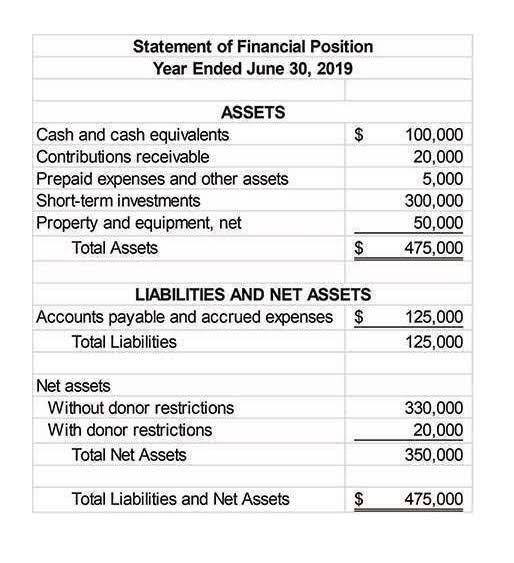
This statement presents the anticipated revenues, expenses, and net income for the budget period based on all the budget components above. These budgets collectively help in assessing the financial health of the organization, ensuring that sufficient funds are available for operational needs and strategic initiatives. Accountants play a crucial role in developing and monitoring financial budgets, using historical data and financial forecasts to create realistic and achievable targets. The master budget helps FP&A teams track how actual revenues and expenses compare to the plan.

Cash Budget and Working Capital Management
The management prefers to maintain ending finished goods inventory equal to 10 percent of next quarter’s sales. Assume finished goods inventory at the end of the fourth quarter budget period is estimated to be 9,000 units. We begin the budget process by discussing the planned operating budget or projected income statement. Overhead budget includes both fixed and variable overhead costs related to production, such as utilities, rent, depreciation, and maintenance. This budget helps in allocating overhead costs to different products or departments. Based on the sales budget, the production budget outlines the number of units that need to be produced to meet sales demand.
The remainder of this chapter describes how a companyprepares a master budget. We emphasize the master budget because ofits prime importance to financial planning and control in abusiness entity. The projected balance sheet, or financial budget, depends on many items in the projected income statement. Thus, the logical starting point in preparing a master budget is the projected income statement, or planned operating budget. The budgeted income statement, budgeted balance sheet, and budgeted cash flow statement are prepared based on the data from the various components of the master budget. These statements provide an overall picture of the company’s expected financial performance for the budget period.
